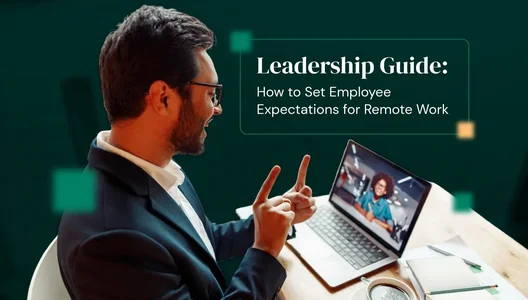
The Rise of the Borderless C-Suite: Why Forward-Thinking Companies Are Hiring Remote CEOs
For years, the narrative around remote work and offshore hiring has focused on specific verticals: Software Development, Customer Support, Digital Marketing, and Back-Office Operations.
Business leaders quickly realized that talent is global, even if their headquarters are local.
But a new, profound shift is happening at the very top of the organizational chart. The borderless workforce has officially reached the executive level.
Today, scaling companies, ambitious startups, and even established enterprises are looking beyond their local zip codes to find their next Chief Executive Officer. The concept of the "Remote CEO" or offshore executive is moving from a radical idea to a strategic advantage.
If your board or founding team is looking to fill a leadership gap, you might be wondering: “Can a company truly be led by someone who isn't physically in the office?”
Here is a deep dive into why the borderless C-suite is the future of executive leadership, and why restricting your CEO search to your local city might be the biggest bottleneck to your company's growth.
What is a Remote CEO?
A remote CEO functions exactly like a traditional Chief Executive Officer, setting the strategic vision, managing the executive team, driving revenue, and ensuring operational efficiency, but they do so outside of a traditional physical headquarters.
The Full-Time Global Executive: A dedicated CEO based in a different city, country, or continent, hired strictly because they are the absolute best person in the world for the job, regardless of their location.
.webp)
5 Reasons US Companies Are Embracing the Borderless C-Suite Executives
Why are boards and founders suddenly comfortable handing the reins to an executive they may only see in person a few times a year?
The shift is driven by five core strategic advantages:
1. Unrestricted Access to Global Executives
When you limit your executive search to a 50-mile radius around your office, you are artificially shrinking your talent pool. By embracing a remote C-suite, you open your doors to industry veterans, proven scaling experts, and visionary leaders from across the globe. You are no longer hiring the best person available locally; you are hiring the best person in the world to execute your specific vision.
2. Built-In Mastery of Distributed Teams
If your company employs a remote or hybrid workforce, having a localized, in-office CEO can create an unintended disconnect. A remote CEO inherently understands the nuances, challenges, and tools required to manage a distributed workforce. They build digital-first cultures, champion asynchronous communication, and lead by example, proving that high performance isn't tied to a desk.
3. Diverse Market Knowledge and Expansion
If your company plans to expand into international markets, bringing on an offshore CEO with deep knowledge of those regions is a game-changer. An executive based in a strategic global hub brings diverse economic perspectives, international networking connections, and an understanding of cross-border compliance that a purely domestic leader might lack.
4. High-Impact Capital Efficiency
For startups and scale-ups, hiring a seasoned CEO locally, especially in high-cost tech hubs like San Francisco, New York, or London, requires an exorbitant salary and massive equity grants. By hiring an offshore or remote executive in regions with a more favorable cost of living, companies can secure top-tier leadership while optimizing their cash runway. This capital efficiency allows the business to reinvest in product development and growth.
5. Laser-Focus on Results, Not Optics
In a traditional office setting, it is easy for leadership to get bogged down in "presenteeism," the optics of being seen working. A remote CEO operates purely on output, KPIs, and strategic milestones. This top-down focus on measurable results trickles through the entire organization, fostering a culture of high accountability and deep work.
.webp)
Overcoming the Stigma: Leading by the P&L, Not the Corner Office
When boards hesitate to hire a remote CEO, the concern usually comes down to accountability: Will they own the number? And who takes responsibility when results stall? But debating whether a remote leader can drive a business forward is asking the wrong question.
Modern executive leadership is not measured by physical proximity or face time. It is measured by revenue growth, operational efficiency, and margin health. A world-class CEO does not need a desk in your headquarters to move the needle. They need a clear mandate, the right resources, and the authority to execute.
The proof is not theoretical. It is operational. At Somewhere.com, we do not just pitch this model. We live it.
Our owner, Nick Huber, owns and operates Somewhere.com, Bolt Storage, RE Cost Seg, and several other companies employing over 425 people globally. He did not build that portfolio from a single headquarters or a corner office. He built it by hiring exceptional talent globally, holding every business to rigorous performance metrics, and leading with outcomes over optics at every stage.
Nick sold his first business, Storage Squad, for a seven-figure exit before scaling Bolt Storage into a portfolio now managing 2 million square feet of self-storage across 68 locations in 11 states. He then acquired Somewhere.com in 2024 and stepped in as full-time CEO Somewhere.com lead its next phase of global expansion. Along the way, he built executive teams, including hiring Sales Directors, COOs, Operations Managers, and Heads of Finance, at 80% less than domestic equivalents, not as a concept but as the actual operating model behind his own businesses.
At every stage, offshore executive talent was not a fallback. It was the strategy.
The remote executives Somewhere.com places for our clients carry that same operational DNA. These are proven, battle-tested leaders who take full ownership of the metrics that drive enterprise value:
- Financial Health: Revenue growth, gross margin, EBITDA, and cash flow.
- Operational Efficiency: Headcount optimization, churn reduction, and capital allocation.
- Go-To-Market Execution: Customer acquisition cost, pipeline velocity, and conversion performance.
They do not manage tasks. They own outcomes.
For growth-stage startups and established enterprises ready to scale, expanding your executive search globally is not just a hiring decision, it is a competitive advantage.
Is Your Company Ready for Global Leadership?
If your company operates digitally, relies on software, manages distributed teams, or serves a global customer base, your next great leader is likely waiting outside your time zone.
The future of business is borderless, and the companies that will dominate their industries in the coming decade are the ones willing to source their leadership globally.