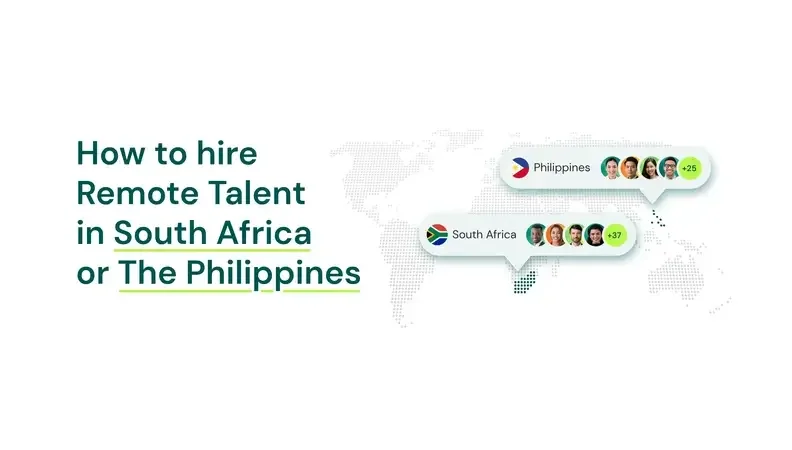
How to Hire Remote Talent in South Africa or the Philippines: A Step-by-Step Guide for US and Canadian Companies
How can US and Canadian companies hire remote talent in South Africa or the Philippines?
US and Canadian companies can successfully hire remote talent in South Africa or the Philippines by first defining the role they need to fill, identifying the best talent market for that role, understanding local employment requirements, sourcing qualified professionals, and building a reliable hiring process.
At Somewhere.com, we help businesses hire full-time remote professional talent in South Africa and the Philippines without the complexity of navigating international recruitment alone. We connect you with experienced professionals who become an integrated part of your team, helping you expand your workforce while maintaining quality, communication, and operational control.
The right hiring market depends on your business goals. We often recommend South Africa for specialized roles such as finance, legal support, technology, executive assistance, and operations because these professionals frequently align well with North American working hours. We often recommend the Philippines for customer support, virtual assistance, administrative support, and operational roles because the country has built one of the world's strongest remote work ecosystems.
Why US and Canadian Companies Are Building Global Teams
The way businesses build teams has changed. Many US and Canadian companies are no longer limiting their hiring strategies to local talent pools because they recognize the advantages of building distributed teams.
At Somewhere.com, we work with companies that need to solve real hiring challenges: rising domestic salaries, limited local talent availability, and the need to scale quickly without sacrificing quality.
A global workforce allows you to:
- Reduce hiring costs while accessing highly skilled professionals
- Find specialized talent that may be difficult to hire locally
- Expand your team faster
- Improve operational flexibility
- Provide customer support across multiple time zones
- Build a more resilient workforce
Successful offshore hiring is not about replacing your existing team. It is about extending your capabilities by adding talented professionals who work as a true part of your organization.
We help our clients build offshore teams that integrate into their workflows, communicate with their internal teams, and contribute to long-term business growth.
South Africa vs. The Philippines: Which Talent Market Is Right for You?
South Africa and the Philippines both offer exceptional remote professionals, but each market provides different advantages. The right choice depends on the role you need to fill, the skills you require, and how your team operates.
Hiring Remote Talent in South Africa
We often recommend South Africa for businesses that need experienced professionals who can collaborate more closely with North American teams during traditional working hours.
South Africa is particularly strong for roles including:
- Finance and accounting
- Executive assistance
- Legal support
- Software engineering
- Marketing
- Operations
South African professionals bring strong English communication skills, international business experience, and expertise across professional services and technical fields.
For companies that require regular collaboration with US or Canadian teams, South Africa offers valuable time-zone alignment, particularly with North American East Coast schedules.
Hiring Remote Talent in the Philippines
The Philippines has developed one of the world's most established remote workforces. The country's decades of experience in the BPO industry have created a deep pool of professionals who understand remote work, customer expectations, and international business operations.
We frequently help businesses hire Filipino professionals for:
- Customer service
- Technical support
- Virtual assistance
- Administrative support
- Healthcare administration
- Back-office operations
Filipino professionals are known for their customer-focused approach, communication skills, and experience supporting North American businesses.
If you need scalable customer support, operational assistance, or coverage across different time zones, the Philippines often provides an excellent talent solution.
At Somewhere.com, we help you evaluate both markets based on your specific hiring needs, including the role, required experience, communication requirements, working hours, and long-term workforce strategy.

South Africa vs. Philippines: Comparing Talent, Cost, Roles, and Time Zones
Step-by-Step Guide to Hiring Remote Talent
Step 1: Define the Role Before Choosing a Country
The most successful offshore hires start with clarity.
Before you decide whether South Africa or the Philippines is the right fit, define exactly what you need from the role.
We recommend identifying:
- Core responsibilities
- Required technical skills
- Communication expectations
- Preferred working hours
- Experience level
- Long-term business objectives
When you define the role first, you can choose the talent market that best matches your requirements rather than choosing a location and trying to force the role into that market.
At Somewhere.com, we help you evaluate your hiring goals first so we can recommend the right approach for your business.
Step 2: Understand International Hiring Compliance
International hiring involves more than finding a qualified candidate. Each country has different employment regulations, tax requirements, worker classification rules, leave policies, and employment standards.
When you hire internationally, you need to consider:
- Local employment regulations
- Payroll requirements
- Worker classification
- Contract requirements
- Data protection obligations
Incorrect worker classification or incomplete employment agreements can create unnecessary legal and financial risk.
Rather than navigating complex international employment requirements alone, many businesses partner with experienced providers that understand local regulations and can help manage the administrative process.
At Somewhere.com, we help simplify international hiring by managing the complexities that come with building teams across borders.
Step 3: Source Candidates Beyond Traditional Job Boards
Finding remote talent in South Africa or the Philippines requires more than posting a job description and waiting for applicants.
At Somewhere.com, we use established talent networks, local market expertise, and targeted recruiting strategies to connect you with professionals who already have the skills, experience, and communication ability required to succeed in a remote environment.
Generic job boards often create a high volume of applicants but do not always provide the quality or consistency businesses need when hiring internationally.
We help you identify candidates who demonstrate:
- Strong communication skills
- Professional experience in their field
- Remote work readiness
- Technical expertise
- Cultural alignment with North American teams
- Reliability and long-term potential
Our approach helps you spend less time sorting through applications and more time evaluating candidates who are genuinely qualified for your role.
Step 4: Evaluate Candidates Beyond Their Resume
A successful remote hire requires more than technical ability.
At Somewhere.com, we evaluate candidates across the factors that determine long-term success on distributed teams.
Our process considers:
- Role-specific skills and experience
- Communication ability
- English proficiency
- Professional background
- Remote work habits
- Problem-solving ability
- Cultural fit
The strongest offshore employees do not simply complete assigned tasks. They communicate effectively, collaborate with your internal teams, take ownership of their responsibilities, and become valuable members of your organization.
By evaluating candidates beyond their resumes, we help you build teams that perform well over the long term.
Step 5: Choose the Right Hiring Structure
Once you identify the right candidate, you need a hiring structure that supports your business goals.
You generally have three options when hiring remote professionals internationally:
Independent Contractors
Companies can hire independent contractors directly for ongoing or project-based work. However, the company is responsible for managing the contractor relationship, contracts, payments, compliance considerations, and ensuring the arrangement aligns with local regulations.
Talent-On-Demand or Managed Service
A managed service provides a more comprehensive workforce solution by helping you source talent, support hiring, manage operational requirements, and provide ongoing guidance to help remote professionals succeed as part of your team.
Employer of Record (EOR) focuses on legal employment administration
An EOR allows companies to hire employees in another country without establishing a local entity. The EOR manages employment contracts, payroll, taxes, benefits, and local employment compliance while the employee works directly with the hiring company.
At Somewhere.com, we help US and Canadian companies build successful remote teams in South Africa and the Philippines by combining talent acquisition expertise, managed workforce support, and international employment solutions. We help you choose the right model based on your goals, role requirements, and long-term workforce strategy.
Employer of Record or Talent Management Partner
Many businesses choose to work with an experienced international hiring partner to simplify employment administration.
At Somewhere.com, we help companies manage the complexity of international hiring by supporting areas such as employment compliance, payroll administration, and local requirements while allowing you to focus on managing your team.
The right structure depends on your hiring goals, level of control, and long-term workforce strategy.
Step 6: Onboard Remote Employees Like Core Team Members
Hiring the right person is only the beginning.
The companies that achieve the strongest results treat remote professionals as an important part of their organization from day one.
At Somewhere.com, we encourage clients to create an onboarding experience that includes:
- Clear role expectations
- Documented workflows
- Access to company tools and systems
- Regular check-ins
- Team communication and collaboration
- Ongoing feedback and development
Remote employees perform best when they understand your business, your goals, and how their work contributes to the broader team.
When you integrate offshore professionals into your company culture, you create stronger engagement, better retention, and a more successful long-term partnership.
Step 7: Build a Scalable Global Team
Many businesses begin their global hiring journey with one remote professional.
Once they see the impact, they often expand into additional roles across departments such as:
- Finance and accounting
- Customer support
- Operations
- Marketing
- Sales support
- Technology
- Administrative functions
At Somewhere.com, we help businesses build scalable remote teams by matching each role with the right talent market.
You may find that South Africa provides the ideal talent for specialized professional roles, while the Philippines provides exceptional support for customer-facing and operational positions.
Rather than viewing offshore hiring as a single recruitment decision, we help you create a long-term workforce strategy.
Why Work With an Offshore Hiring Partner Like Somewhere.com?
Hiring internationally on your own is possible, but managing sourcing, screening, compliance, payroll, and employment administration across countries requires significant expertise.
At Somewhere.com, we simplify the process by helping you:
- Identify the right talent market
- Source qualified professionals
- Evaluate candidates
- Manage international employment requirements
- Reduce hiring timelines
- Build and scale remote teams
Our experience working with companies across industries allows us to understand what makes offshore teams successful.
Instead of managing multiple vendors or navigating unfamiliar hiring markets alone, you gain an experienced partner that helps you build a reliable global workforce.
Real-World Success Stories
The impact of offshore hiring becomes clearer when you see how businesses apply this strategy successfully.
How a Law Firm Reduced Costs and Expanded Capacity With Offshore Talent
For example, we helped a law firm build an offshore team that reduced payroll costs by more than $146,000 while increasing operational capacity and maintaining service quality.
You can read the full example here: Law Firm Success Story
How a Compliance Company Improved Customer Support With Remote Team Members
We also helped a compliance services company expand its customer support capabilities by hiring offshore client service representatives who improved operational capacity while maintaining a high level of service.
You can explore that example here: Client Service Representative Success Story
These examples demonstrate that offshore hiring is not simply a cost-saving strategy.
When done correctly, it allows you to access exceptional professionals, improve operational efficiency, and build teams that contribute directly to your company's growth.
Frequently Asked Questions About Hiring Remote Talent in South Africa and the Philippines
What is the difference between hiring remote talent in South Africa and the Philippines?
South Africa is often a strong choice for businesses hiring finance, legal, technology, executive support, and other specialized professionals who benefit from greater overlap with North American working hours.
The Philippines is often ideal for customer support, virtual assistance, administrative support, and operational roles supported by a mature BPO industry.
The best choice depends on the role, required skills, working hours, and long-term business objectives.

Is it legal for US and Canadian Companies to hire remote staff in South Africa or the Philippines?
Yes. Businesses can legally hire remote professionals in both countries.
However, international hiring requires proper attention to employment regulations, worker classification, payroll requirements, and local compliance obligations.
Many companies work with experienced hiring partners to simplify these responsibilities.
How does headhunting, managed services, and Employer of Record (EOR) services differ when hiring remote talent internationally?
Headhunting, managed services, and Employer of Record (EOR) solve different parts of the international hiring process.
Headhunting focuses on finding the right talent. A headhunting service helps you identify qualified professionals, access local talent markets, screen candidates, and find individuals who match your specific role requirements.
Managed services focus on building and supporting your remote team. A managed service provides broader support beyond recruitment, helping you source talent, evaluate candidates, onboard employees, support workforce management, and create a successful long-term remote team.
Employer of Record (EOR) focuses on legal employment administration. An EOR allows you to employ professionals in another country without establishing your own foreign entity. The EOR manages employment contracts, payroll, taxes, benefits, and local compliance requirements.
At Somewhere.com, we combine these capabilities to help US and Canadian companies build high-performing remote teams in South Africa and the Philippines. We help you find exceptional professionals, support the hiring process, and manage the complexity of international employment so you can focus on leading your team.
Can US companies hire remote professionals in both South Africa and the Philippines?
Yes.
Many businesses build blended global teams by hiring professionals in both markets based on each role's requirements.
For example, a company may hire finance or technology professionals in South Africa while building customer support or operations teams in the Philippines.
The Bottom Line: Building a Global Team With South African and Philippine Talent
Hiring remote talent in South Africa or the Philippines is not simply about reducing costs.
It is about building a stronger, more flexible workforce by accessing skilled professionals who can become long-term members of your team.
At Somewhere.com, we help US and Canadian companies identify the right talent markets, hire experienced remote professionals, and manage the complexity of international hiring.
Whether you are making your first offshore hire or expanding an existing global team, we help you build a workforce designed for long-term growth.